Build complex toys and simple tools

Shooting infrared with the Panasonic DMC-FZ28

<< Previous  Oct 28, 2008  Next >>
I've received a number of inquiries about the infrared capabilities of the Panasonic DMC-FZ28, prompted no doubt by the inclusion of an infrared panorama in one of my posting of pictures from this camera.

Does the FZ28 have infrared capabilities? Yes. And no.

Infrared light lies just below the visible spectrum, somewhere between red light and heat radiation. Infrared light is not visible to the naked eye. The image sensors in cameras like the FZ28 are very sensitive to infrared. To fix this, the manufacturers place a filter in front of the sensor that blocks most of the infrared light.

To shoot infrared with this type of camera, you have to use a filter (like the Hoya R72) that blocks everything but the infrared. It's easy to see how the combination of the infrared-only filter in front of the lens, combined with the no-infrared filter in front of the camera's sensor leaves you with very little light for taking pictures. At 100 ISO, even in daylight, I had to use a tripod.
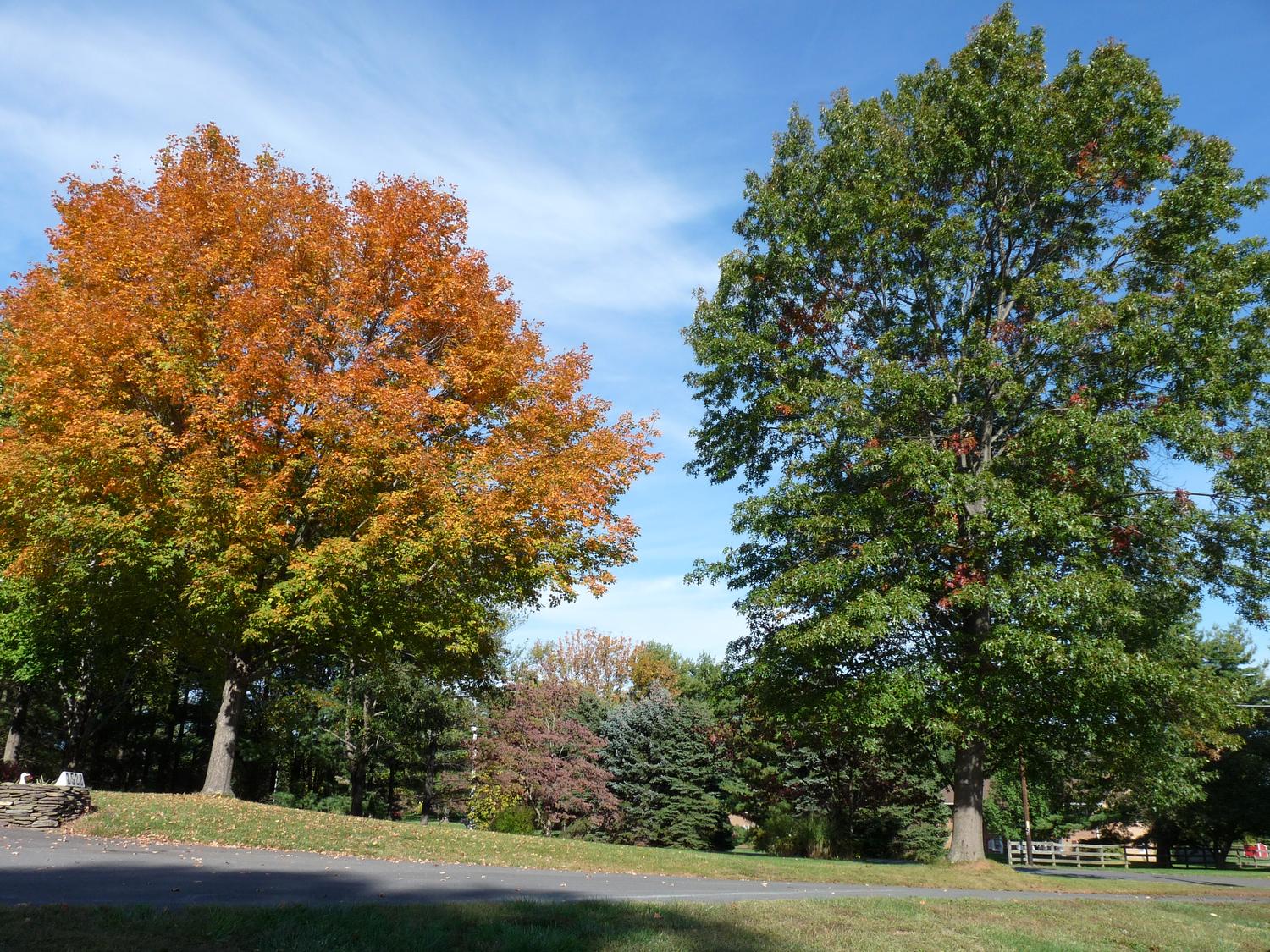
In living color - Panasonic DMC-FZ28 - 1/320 sec @F/5.6 - by Tony Karp
In living color - Panasonic DMC-FZ28 - 1/320 sec @F/5.6
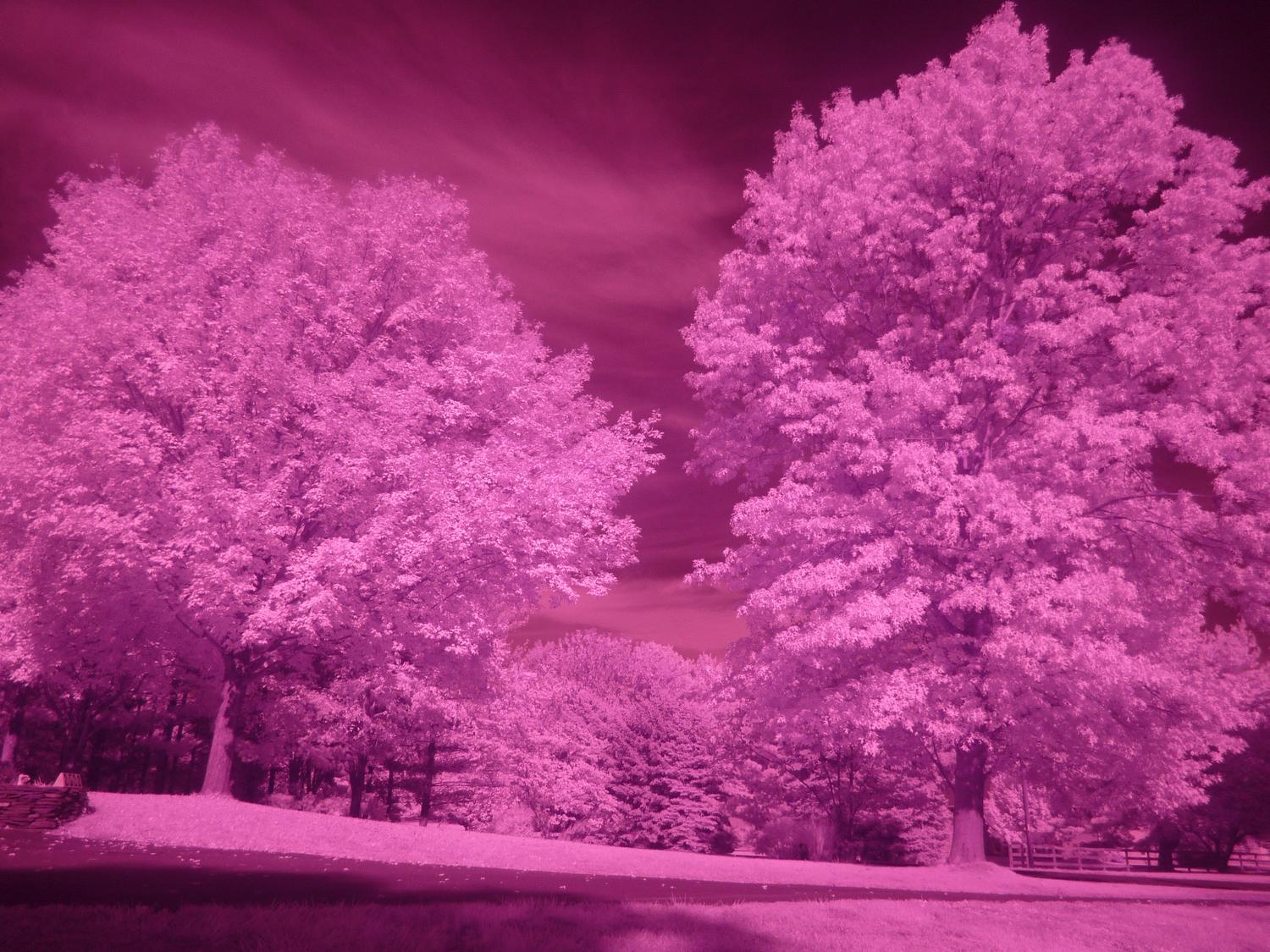
Same as above, but with Hoya R72 filter. It has the classic infrared look, but overall pink. One second exposure, 100 ISO. - by Tony Karp
Same as above, but with Hoya R72 filter. It has the classic infrared look, but overall pink. One second exposure, 100 ISO.
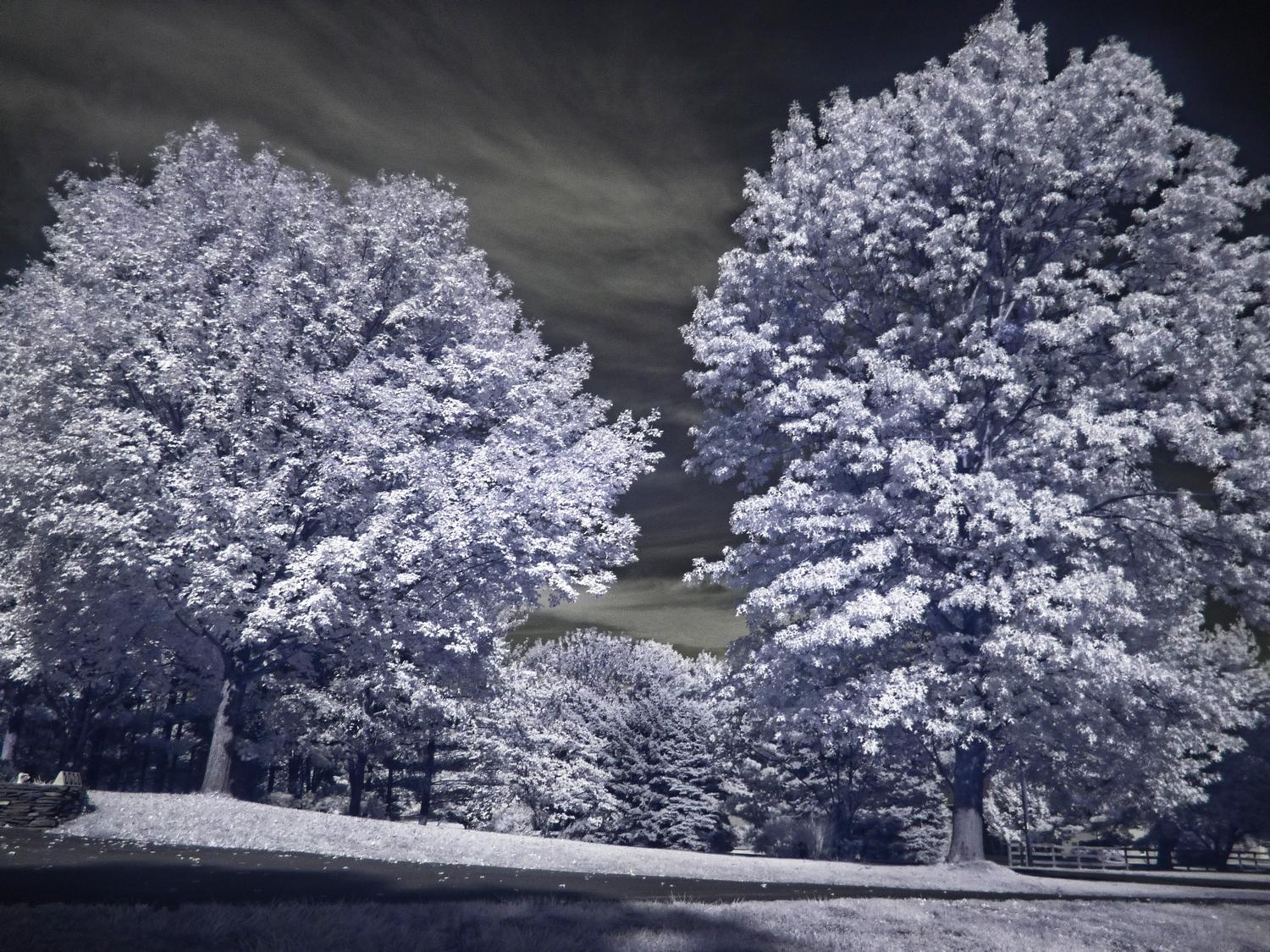
Still in color, but with custom white balance to eliminate the pink cast. One second exposure, 100 ISO. - by Tony Karp
Still in color, but with custom white balance to eliminate the pink cast. One second exposure, 100 ISO.
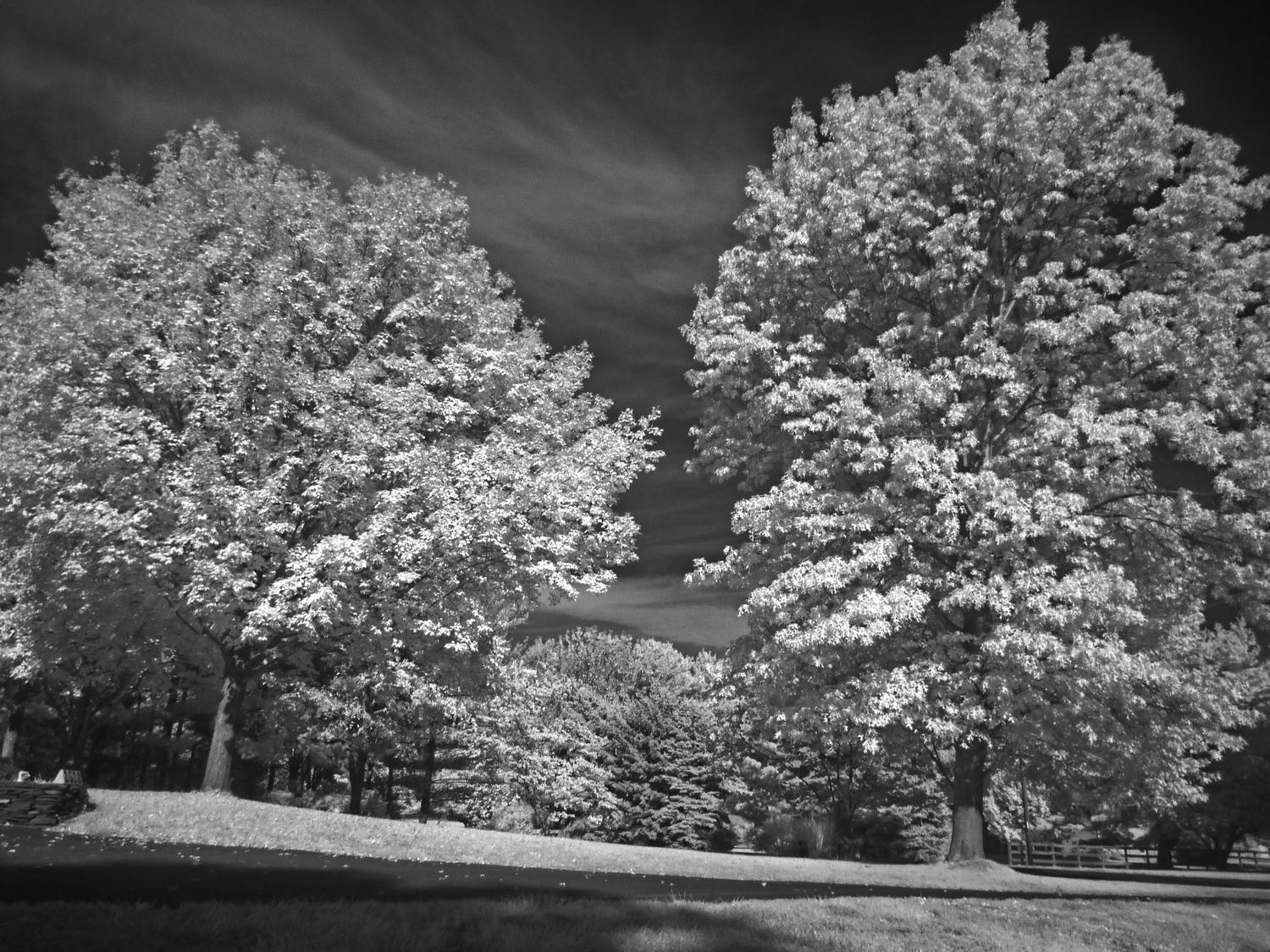
As above, but color mode set to black and white. One second exposure, 100 ISO. - by Tony Karp
As above, but color mode set to black and white. One second exposure, 100 ISO.
Some trees in front of my house. 1/8 Sec, 800 ISO - by Tony Karp
Some trees in front of my house. 1/8 Sec, 800 ISO
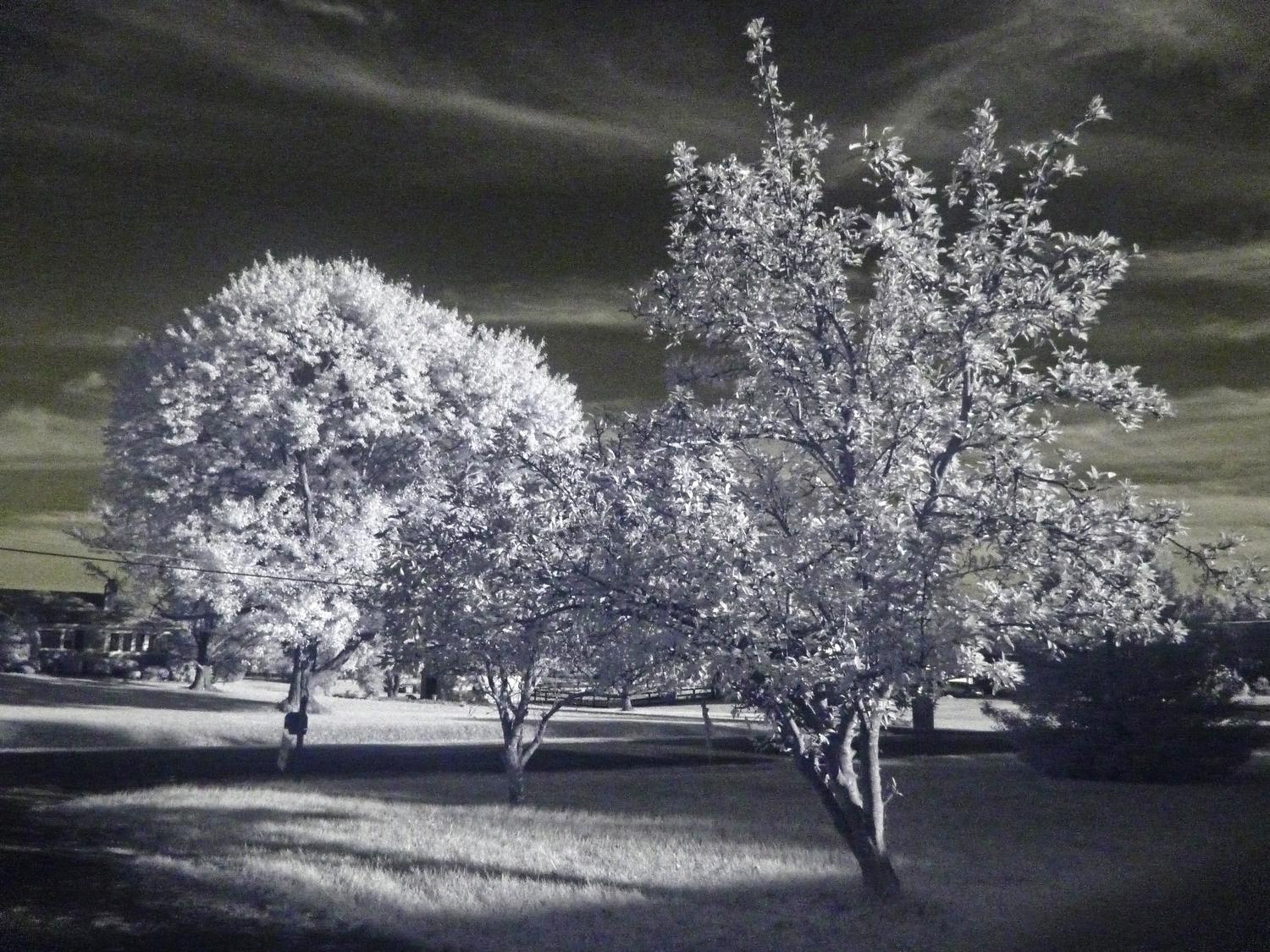
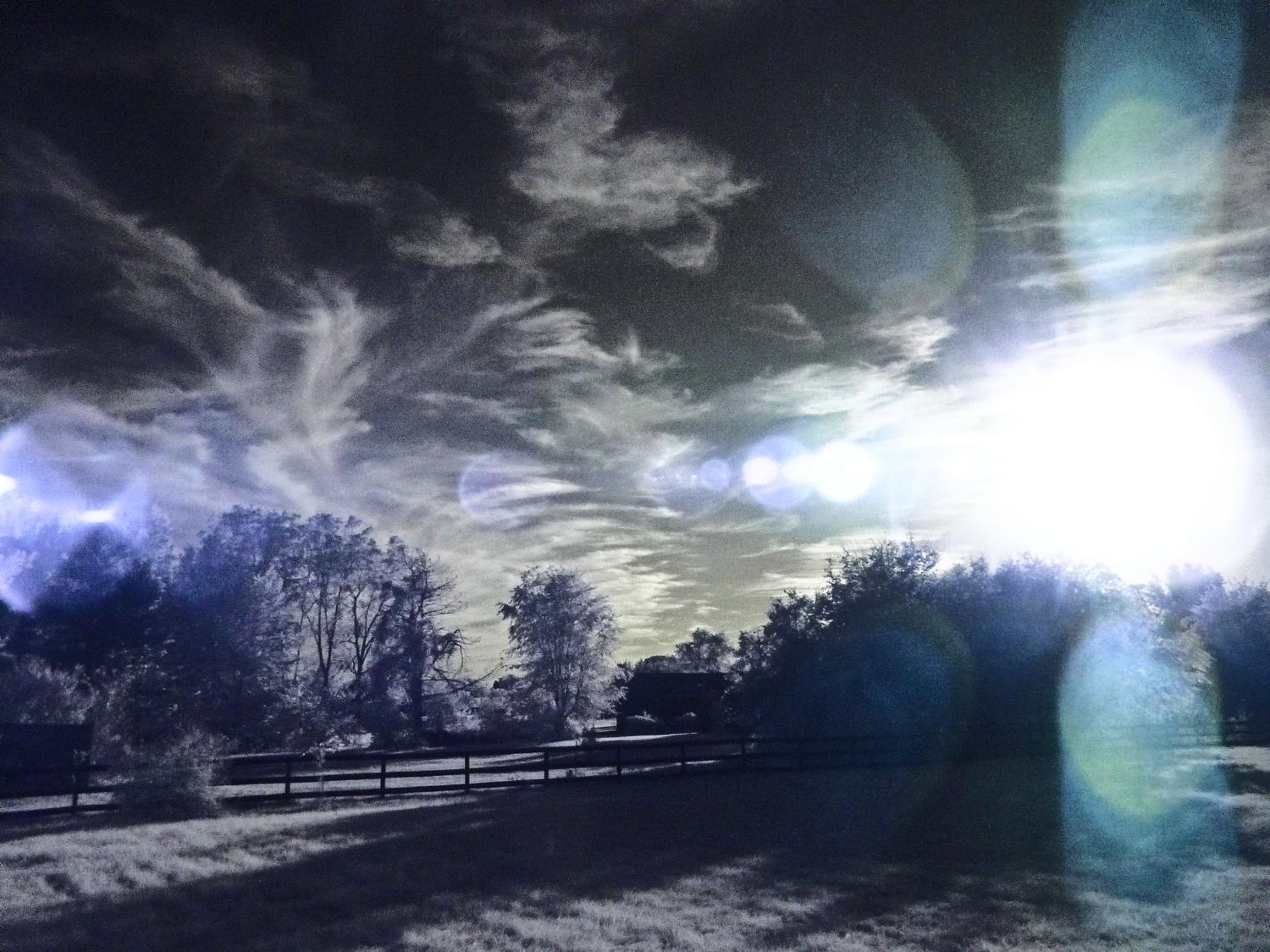
Shooting into the sun gives a little more drama. Reflections are from the infrared filter. 1/13 sec, 400 ISO - by Tony Karp
Shooting into the sun gives a little more drama. Reflections are from the infrared filter. 1/13 sec, 400 ISO
As you can see, there is a way to take infrared pictures with a camera like the DMC-FZ28. At 100 ISO, in direct sunlight, you'll be using a shutter speed of about one second. You can bump up the ISO as high as 3200, which will get you up to about 1/30 second, but with a terrific loss of quality.

I forgot to mention that the Hoya R72 filter costs about $50, depending on size.

If you're really serious about infrared photography, there are two other routes you can take. One is to buy a digital camera that has been modified for infrared photography by having the infrared-blocking filter removed from the camera. You can find these through your favorite search engine.

The other route is to buy a Sony camera with Nightshot capability. In these cameras, there is a mechanical switch that flips the infrared-blocking filter out of the way. Some of the Sony H series cameras have this capability. I still have my old Sony DSC-F707, which I use for infrared work. I'll be writing more about this in a future post.
<< Previous  Oct 28, 2008  Next >>
Copyright 1958-2008 Tony & Marilyn Karp
Our Art Museum
Web Site Design
Systems Design
The Future
About
About Tony Karp   -  
Recent Entries
Some pictures and some settings - Part 4 - DMC-FZ28
Some pictures and some settings - Part 3 - DMC-FZ28
Some pictures and some settings - Part 2 - DMC-FZ28
Some pictures and some settings - Panasonic DMC-FZ28
Noiseography -- A new photographic technique
Shooting infrared with the Panasonic DMC-FZ28
You're never too young
One month with the Panasonic DMC-FZ28
A trip to Berryville - Panasonic DMC-FZ28
It's the Hobbitt's birthday
On September 11th
Shooting Tri-X with the Panasonic DMC-FZ28
A shot in the dark - Panasonic DMC-FZ28
Sunset and the far-up lens -- Panasonic DMC-FZ18
Further musings on the Panasonic DMC-FZ28
Customizing your camera for high-ISO photography
Panasonic DMC-FZ28 vs DMC-FZ18 at high ISO
Some musings about the Panasonic DMC-FZ28
Hummers, SUVs, DSLRs, and my DMC-FZ28
Panasonic DMC-FZ28 -- At the Flying Circus
Panasonic DMC-FZ28 -- The journey begins
Farewell, my Panasonic DMC-FZ18
More about the settings for the DMC-FZ18
Dealing with the modes and settings of the DMC-FZ18
Photography becomes art - Bird on a wire
The artist's muse at sunset -- DMC-FZ18
Do you need fancy equipment?
Now here's my plan
Good cookie, bad cookie
But seriously, folks...
Post-processing Mr. Squirrel
A museum of one's own
We need new words to describe what's happening
Going over to the dark side
Shooting the moon
Happy Anniversary, Hobbitt
The view from my window - DMC-FZ18
My favorite museum
A toast to the artist's muse
The DMC-FZ18, a sunset, and a glass of beer
Remembering Herbert Keppler
Shooting abstracts with the Panasonic DMC-FZ18
Fixing a Panasonic DMC-FZ18 problem
More pictures from my Panasonic DMC-FZ18
The journey of a thousand Melvins
Stairway to the stars -- Extreme post processing
DMC-FZ18 - Raw vs JPEG - The JPEG Manifesto
Chromatic aberration and the DMC-FZ18
Raw vs JPEG, the DMC-FZ18, and a mystery
Some pictures from my Kodak P880 - Part 2
Some pictures from my Panasonic DMC-FZ18
Some pictures from my Kodak P880 - Part 1
DMC-FZ18 - Don't be afraid of the dark
Shooting in "Medium" - DMC-FZ18 - The right exposure
Shooting in "Medium" and the Panasonic DMC-FZ18
In-use review -- Panasonic DMC-FZ18 - Part 2
In-use review -- Panasonic DMC-FZ18 - Part 1
Photography becomes art - Fantasy at Ida Lee
Photography becomes art - The chefs at Little Washington
My new old camera - the Kodak Easyshare P880
Photography becomes art - Variations on a theme
Doing the impossible - Part 4 - The final result
Doing the impossible - Part 3 - The solutions
Doing the impossible - Part 2 - The challenges
Doing the impossible - Part 1 - The Godfather
All the (art) news that's fit to print
The museum becomes art - #1
Photography becomes art - Making an angel
Some theories about the Sony DSC-H9
How to test a camera
Hitting the wall
Extreme post-processing - Working with infrared
Everything old is new again
Some further thoughts on the Sony DSC-H9
Farewell, my DSC-H9 - a mini review
Learning to live with the Sony DSC-H9
Possibilities
Some thoughts about cameras - The Sony DSC-H9
Blogging 2.0 - A new interface
A funny thing happened on my way to the blog
In the beginning...